
Moving - Unpacking - Playing Concerts in between....
Oy wey, I feel guilty, haven’t written in such a long time, and now I am writing without having anything specific to say. This will be probably the shortest blog ever on this page, but somehow I have to justify its existence, and since some people seem to read it, I don’t want to stop without at least trying to keep writing at least once a month. I just finished playing another Elgar performance in the very charming little city of Madison – I think it wasn’t a bad performance, but somehow I didn’t feel the closest of all connections with the audience; there was quite some coughing in the first minutes of the piece, and I guess it’s my upbringing to look for the blame in myself. I didn’t manage to engage them and draw them in with what I had to say with the music which resulted in the fact that they weren’t quite with me.What can one do if one realizes that? Start throwing some antics at them? No way, bad idea, even though it might do the trick, but I tried to just give as much intensity and emotion as I could to make the coughers be silent, and maybe I am wrong, but I think it worked later on. The orchestra did a wonderful job sticking with me and I can’t wait until tommorrow after having done some more thinking about the beginning, what to do to surprise the audience and take them with me from the start. Well, some might say, it wasn’t my fault, it was just bad atmosphere, maybe the weather was too cold and people were sick – my answer is NO! It is the performer who can create a breathless atmosphere in which nobody dares to make a noise, but it is very hard and doesn’t happen to often.

Facial Expressions during the Dvorak Concerto in Canada
Chilling out and preparing for a short night on the plane from Toronto to Munich I take the opportunity of the wireless service here in the Air Canada Lounge to write about my thoughts of my past week. I played the Dvorak with the orchestra of Kitchener/Waterloo (near Toronto) conducted by their very talented young chief conductor Edwin Outwater. I met him before in San Francisco and heard such wonderful things about him from the musicians of the SF Symphony that I decided to come to Canada for only these performances to open his 2nd season – and I didn’t regret that decision: each performance got more flexible and more profound, a real treat for a maybe over-played concerto.

Being or at least acting important
Gosh, I need a break – recording one program, performing a full recital with another one with no time in between, wears the most resilient musician down. Last night Markus Becker and me played the opening of the Reger-Festival in Weiden (near Nuremberg), and if somebody would have listened to our rehearsals, he or she wouldn’t have believed that we were attempting to play that repertoire in concert the same day. We had good excuses for not being ready though; both of us just came out of tough recording projects, him doing Reger-Bach arrangements for Hyperion, I did the two very difficult Prokofiev Concertos. But at the end of the day, the audience in Weiden didn’t know about this and deserved a good concert.With the last amounts of concentration left, after working hard all day (again I must have played the cello for at least 8 hours including the concert) we pulled off the miracle and played actually really well. I was especially nervous because it was the first time since about 17 years that I was playing a recital with the music in front of me. I had spoilt myself by always knowing the sonatas I was performing by heart, which gave me another authority and view over the piece, at least this is the feeling I have while playing. But for yesterday’s concert there was no chance to re-memorize the Sonatas by Strauss and Reger in half a day, even though I knew them a year ago. The 5th Bachsuite I had to play by memory since the music is all packed in some moving boxes, but the rest of the concert I had to endure looking at the music once in a while. I survived and the concert is history :)

Loosing 3 kilos in 6 days just by recording Prokofiev
When I arrived last night at home in Berlin after having been gone for the week, my roommate looked at me and claimed that I had lost weight. This morning after sleeping like a child for almost 9 hours I verified her claim: 3 kilos (6,6 US pounds) in 6 days – and that without sports or dieting, just pure and utter stress. What had happened?
Well, the last week I had spent in beautiful Bergen, Norway, in order to record for Hyperion two big concertos by Prokofiev, his op.58 “Concerto” and the more famous “Sinfonia Concertante”, both considered among the toughest pieces for cello; technically and physically that might be true. As usually I was very well taken care of by my favorite producer-team of all times, Andrew Keener and Simon Eadon, and the Bergen Philharmonic under their “chief” Andrew Litton was in splendid shape, but he schedule was grueling.We had so-called “Rehearse/Record” sessions, which means not an isolated day of rehearsals for these two 40 minute pieces of which the op.58 is practically unkown (I had never heard nor played it before) but we rehearsed a movement and then jumped into recording it. What I found especially brutal was the fact that the sessions happened each day from 10 am until 3 pm with two, three breaks in which Andrew Litton and me just listened to what we had recorded. After the session I went back to my dressing room to practise another two, three hours the next day’s movements.
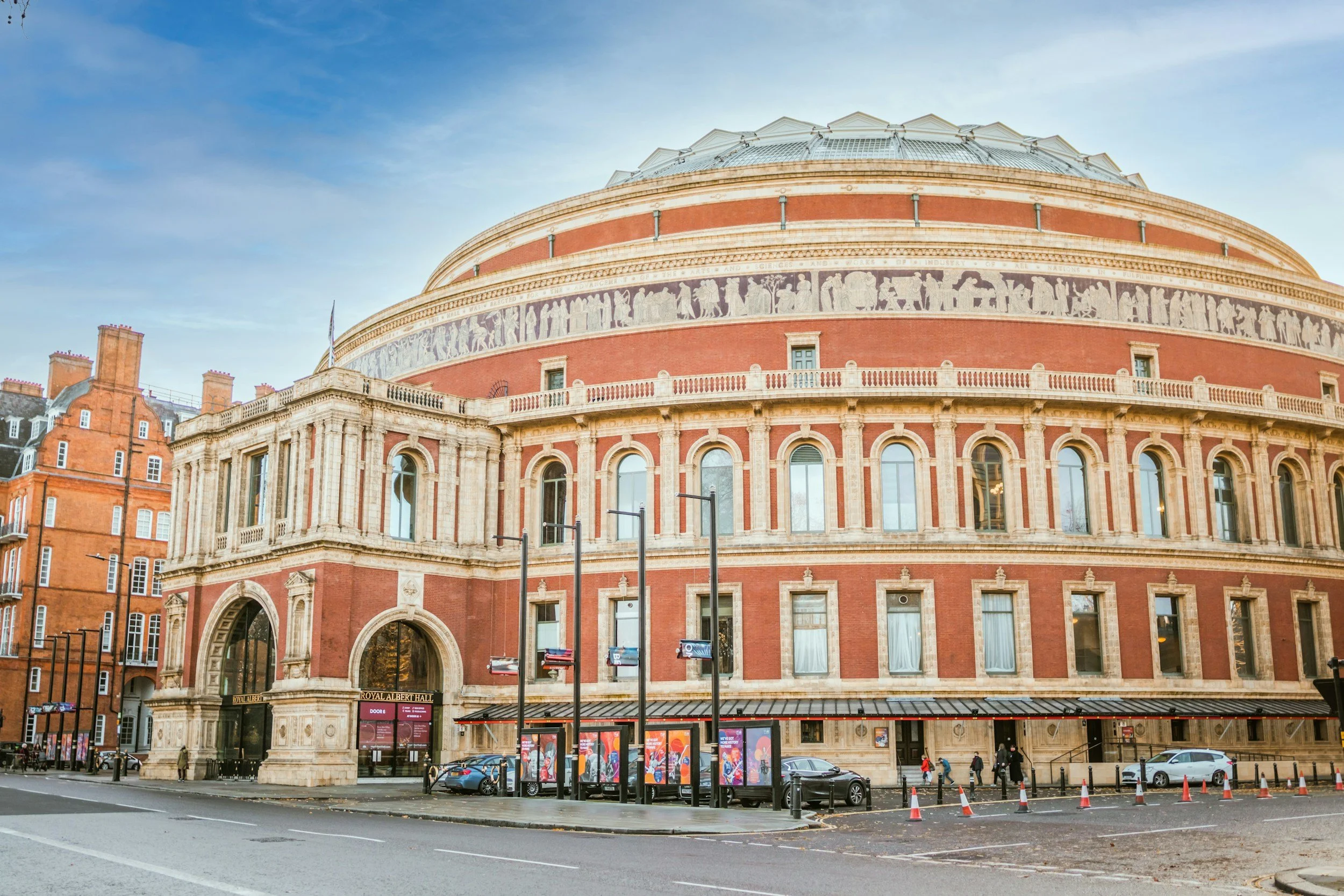
In London at the Proms
While my little family is still sleeping in the hotelroom here in London I am taking the opportunity to do a bit of writing before the gap to my last entry is too long and I broke my promise to write at least twice a month. Normally they are never travelling with me, but since the Royal Albert Hall is one of the most amazing places to play at in the world (and one of the most scary as well – soooo big, and without amplification we feel like little dwarfs in front of far too many people) I thought it would be nice for them to see their father/husband sweat. And sweating they’ve got plenty of to see….After returning from New Zealand I really had it for a while, couldn’t stand touching the cello for a while, so I decided instead of practising and learning the Prokofiev Concerto (recording in 11 days, arghh!) I took a break of more than a weak and spend some quality time with my family who returned shortly after me from their holidays in Puerto Rico (lucky them!).

"Go home and take a shower!"
1988/89 I spent studying in Cincinnati, OH. My cello teacher turned out to be rather lame, so I focused a bit on playing quartet and taking lessons with the quartets in residence there, the LaSalle- and the Tokyo-Quartet. I had the time of my life, living together with two German guys in a one-bedroom flat, getting up every morning at 6 am to the sounds of either the beginning of Tosca or Prokofiev’s Romeo and Juliet, (the part, where the violins go crazy – God, I am so bad with names, I even forgot what that part is called) in order to start practicing at the practice floor of the Conservatory at 7 am.Why am I writing about this right now? Well, after one of the lesser succesfull quartet recitals of our quartet, Henry Mayer, the second violinist of the LaSalle-Quartet, an Auschwitz survivor with the driest sense of humour, didn’t congratulate us, he only said: “Go home and take a shower!” This was so wonderfully prosaic that we used this saying at many occasions, describing a bit the indifference one tends to feel after having finished or accomplished something, and afterwards, when there wasn’t much else to do, you could just go home and pour some water over yourself, forgetting about the success or the lack of success one just had – it all passes anyway.

Travel to Australia
My last concert in Europe this season happened two days ago, playing the Rococo Variations with the Russian National Orchestra under Philippe Auguin in Bad Kissingen, but unfortunately I am not going to some well-deserved family holidays, but while my son and his mother are travelling to her mother to Puerto Rico, I am right now on my way to my first visit to Australia and later New Zealand. Actually pretty exciting, but I just find it very sad that I can’t spend the first half of Janos’ summer holidays with him – something I swore myself to avoid, and when the offer came to play during summer on the other half of the world I agreed hoping I could take him with me. I wasn’t aware though that it is winter in New Zealand right now, and this poor German boy deserves a nice summer after the grueling German winters…
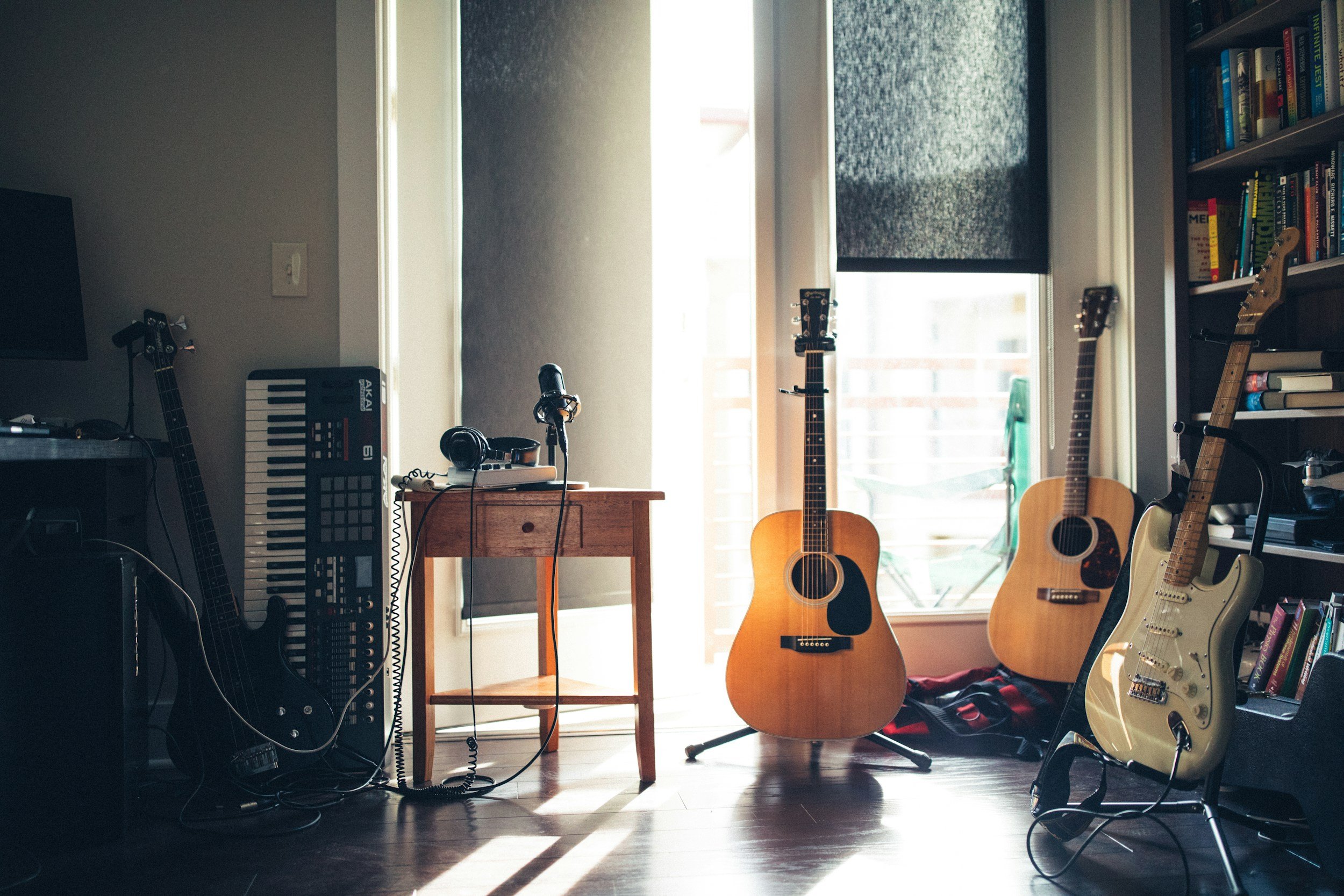
What would you like to change in the music business?
I’d love to see a greater humility towards the music in this business which should not even be called like that. There are too many promoter and artists who are thinking first profit and then the music (if at all). It got for my taste a bit too “fee-oriented” instead of just trying to do justify ones existence as an artist.
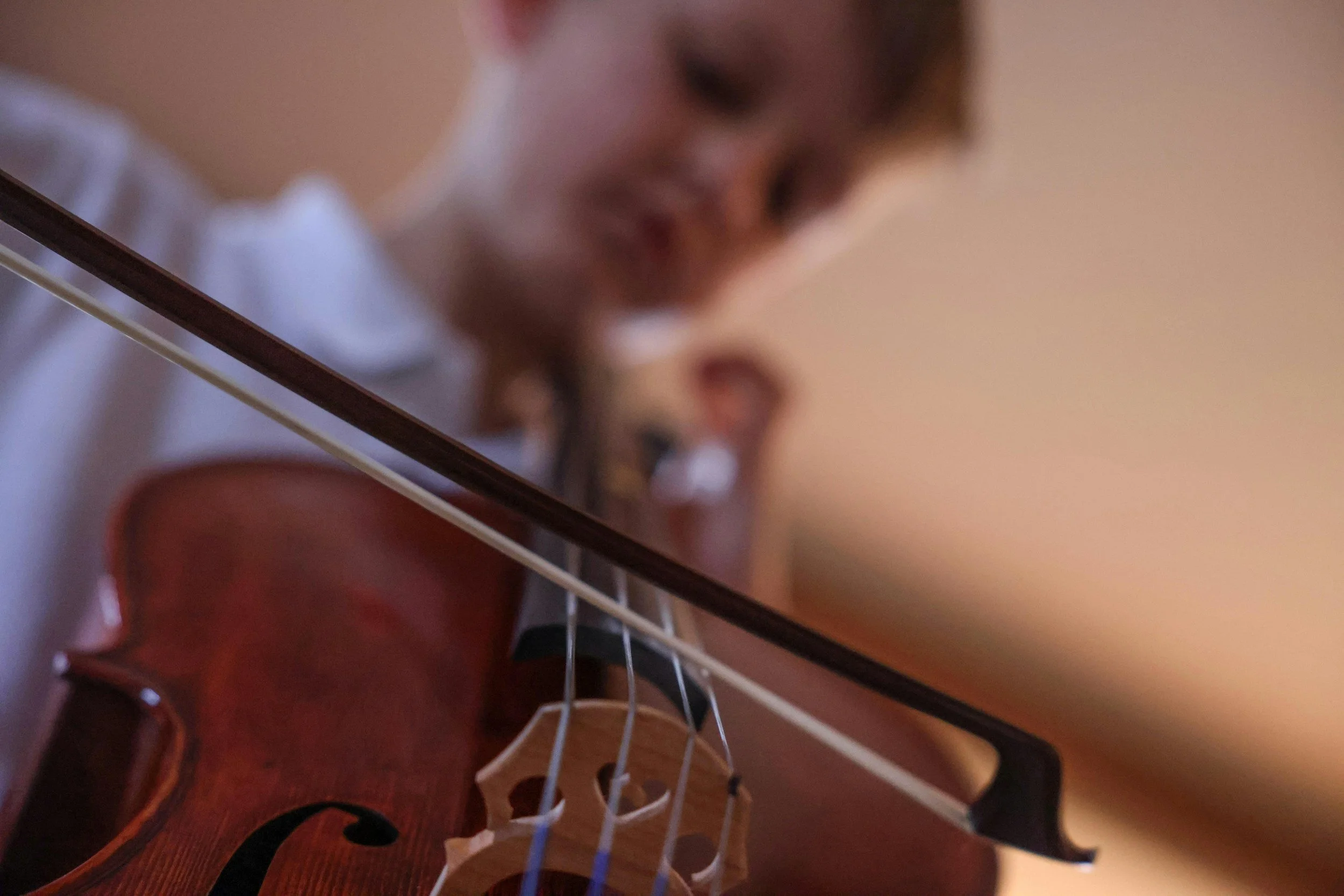
When and why did you start playing the cello?
I was about eight and a half years old, playing with my toys in the garden, when my mother asked me, if I would like to play another instrument besides the piano, because my little sister had just begun the violin. I wasn’t too interested, but to get her out of my face, I said “Why not?”, and then she suggested the cello. Same answer. Today she says that she could have named any instrument and I would have agreed!

What do you think while playing the cello?
My thoughts while practicing and during a performance are very different. In practice I have to be my toughest judge, a perfectionist to the very last note, technically as well as musically, but in performance I have to force myself to forget all about technique, all about preconceived ideas, nothing but to focus on the music, being creative and expressive every single moment, to dare taking all possible risks while imagening abstract stories or feelings I want to translate into the music, images or colours I want to transport through the cello to the audience. In my practice room I always have a blank paper next to me because I tend to have the best ideas while practicing. Ideas about children education, how to deal better with women, what to buy in the grocery store, which program to play with which pianist, what to record, whom to contact etc.. It just seems as if practicing equals brainstorming, while performing comes closer to a dream.
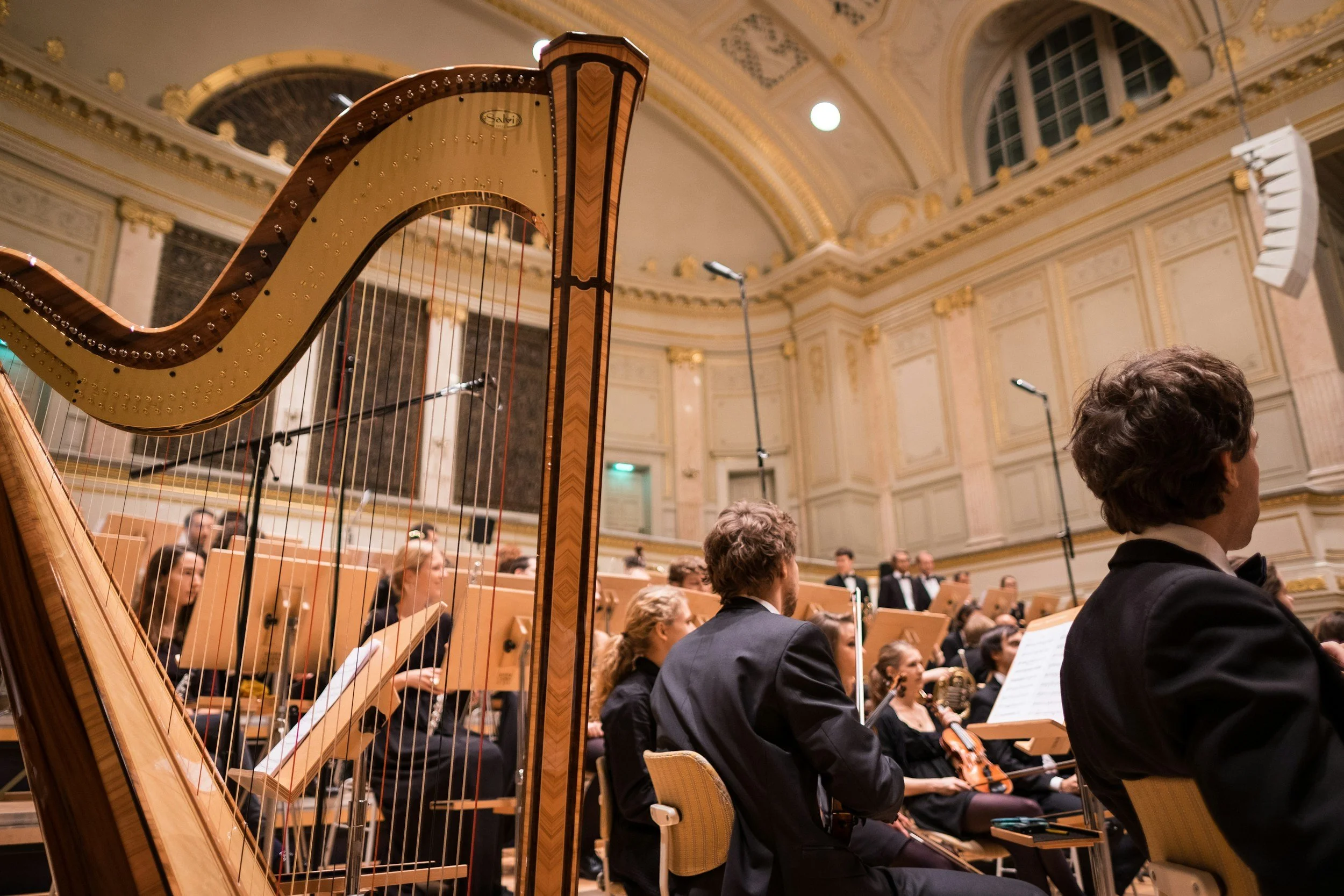
How do you get concerts?
As with all soloists nothing goes without managers, and after some rather negative experiences I finally found a team which I trust to develop and to put my visions and ideas into realitiy.
My so called general management is located in London, the agency SulivanSweetland, two lovely ladies, directly responsible for finding concerts in the UK, Benelux, Scandinavia and Australia as well as my recording deal with Hyperion. In addition to that they not only coordinate my entire calendar and the already existing local representations, but they try to establish me in markets in which I am not so present, especially Asia. They put together presskits, demo cd‘s, send them with letters or hand them personally on their numerous travels out to representers, orchestras and local managers, since personal contact counts more than ever. The times where an agent picks up the phone and arranges the concerts are over for a while. It is a hard job, and I wouldn’t want to switch with them, concertizing is much easier. The two other most important managements, with whom I am in constant touch is my Germany management called markus bröhl artists and concerts. The owner is a friend of mine, who loves music and his artists more than anything, that he puts his work above everything else. And last but not least Michal Schmidt in New York who has done miraculous work in the shortest of all periods. Within a year she had turned my American career around by just informing every single orchestra about me, and within months she had filled an entire season with eight different orchestras. Most important for me is the fact, that all of them care about music and the human being behind the musician which results into me being able for the first time in my professional life to take with their support an entire summer month off – I am not twenty anymore and I need a break to recharge the battery!
Are you afraid to perform?
Not really :) it is rather a kind of curious nervosity. It is not so much the fear of failure which gives me this tingling in the stomach area but rather the anticipation of a fun-ride like a roller coaster; you know you will arrive, but so much can happen on the way… Maybe it’s the theater blood of all my ancestors, who were singers, actors, conductors and dancers which gives me this strange love for the stage which lets me deal with all the hassle of travelling, the tristesse of being alone, the hard work of always starting at zero again, being exposed to criticism all the time, as if the self-criticism wasn’t destructive enough.

How do you deal with criticism/reviews?
Since I don’t have a teacher for the last 13 years anymore and most of the people won’t tell you the complete truth after a performance I am happy to be able to learn from reviews, bad as well as good ones.
Certainly we mustn’t take everything which is written or said about us at face value, but on the other side if I find a common tenor in several reviews I take it very serious and actually this attitude made me a better player over the years. As for many musician it is not always easy for me to accept criticism, it can hurt at times, especially because we need enough self-confidence in order to survive on stage, which can be undermined by a slating. I try to read reviews no matter if negative or positive a couple of days after a concert and then reflect about it. No, I don’t want to please everybody, rather the contrary: I try to find my own voice and play things the way I and not the possible reviewer, think they should be played; but at the same time we never know how our music arrives in the hall, and for that the music critic is a good mouthpiece.

Of what are you particulary proud?
I am happy that after 15 years of playing the cello professionally I am still able to feel the same childlike pleasure making music as I did when was allowed to play chambermusic for New Years 1979 together with my father and some of his colleagues the entire evening. I am glad that I can experience and listen to music with the same naive amazement as I did as a four-year-old in my first concert visits. I am grateful that I am lucky enough to play with wonderful musicians in beautiful halls and even get paid for it. Proud I am maybe of my discipline to not let myself go in spite of my lazy nature and not to give up whenever there is some resistence as I did constantly as a child, and that until today I am fighting against the temptation to choose the security of a „job“ (teaching or orchestra position) over the freedom of a soloist.

Do you like to practice?
As a teenager and by rather lazy nature I did’t like practicing too much, as a matter of fact I practically hated it. Nowadays it has beomethe greatest pleasure because it is the only time where I can really focus on just one thing. No telephone, no computer with e-mail, no so-called multi-tasking, but just the cello, me and the music. It is almost like an escape from the multiple tasks a career requires. I love to practice new pieces, and there always lays a great challenge in re-learning pieces I played already a thousand times. The more often I work on a piece intensely, the deeper I can feel it, the better I understand it and recognize performing possibilities which I hadn‘t seen before, but as everything in life, the last few percents of achieving anything hurt a lot.

What exactly is your "school project?"
In many ways I hate the word "project" and I prefer to call it at best a commitment at schools. For my first performances in the US I was obliged to also participate in the so-called residencies program which meant nothing else but doing some pioneer work in schools, elementary as well as high-schools. At first I thought myself for too good and did it more or less reluctantly.
But already the second time I had to realize that it was not only an important and efficient tool to fill a hall in the evening with much more and a much younger audience, but that I learnt it lot about myself - at the end of the session I had to admit to myself that I had fun and felt fulfilled. I gave my managers immediately the order to offer it wherever I was playing. Since I am not very good in selling anything, I had a hard time convey the idea, but today I try to go as often as possible to schools, and pursue that in a much more aggressive way by talking to the school inspectors directly to do exactly what?

Was genau ist das, Dein “Schulprojekt“? Und wofür soll das gut sein?
Eigentlich hasse ich das Wort "Projekt", deshalb ziehe ich es auch vor, es bestenfalls als "Engagement an Schulen" zu bezeichnen. Bei meinen ersten Auftritten in Amerika war ich dazu verdonnert, sogenannte residencies zu machen, d.h. an Schulen zu gehen und dort ein bisschen die klassische Musik zu vermitteln. Zunächst saß ich auf allzu hohem Rosse und habe es eher widerwillig mitgemacht, doch bereits nach dem zweiten Mal mußte ich feststellen, dass dies nicht nur wichtig ist, und zwar um kurzfristig einfach eine Halle am Abend mit viel mehr jungen Menschen füllen zu können, sondern dass es mir auch Spass macht und mich sehr befriedigt. Sofort bekam meine Managerin den Auftrag, dies auch in Deutschland umsonst anzubieten, wo immer ich auch spielen würde. Da ich nicht gut im Verkaufen bin, konnte ich es damals nicht so gut vermitteln, doch heute versuche ich so oft wie möglich an Schulen zu gehen, und zwar auf weitaus aggressivere Art und Weise; ich überlasse es nicht mehr den armen Managern, sondern gehe diverse Schulräte direkt an – um was genau zu tun?
Was würdest Du gerne am Musikgeschäft Ändern?
Ich würde gerne eine grössere Bescheidenheit gegenüber der Musik in diesem Geschäft, welches nicht einmal so genannt werden sollte, sehen. Es gibt zu viele Veranstalter, Manager und Musiker, die zuerallererst an den Profit und dann an die Musik denken (wenn überhaupt). Für meinen Geschmack ist das alles ein wenig zu “honorarorientiert” geworden, anstatt dass wir einfach erst einmal versuchen, unsere Existenz als Musiker zu rechtfertigen. Ausserdem denke ich, dass zu wenige dieser Künstler, deren Manager und die Konzertveranstalter erkennen, dass wir mit jenem snobistischen Zugang zur Musik (“wir sind etwas besser als alle anderen, unsere Musik ist mehr wert als jede Popmusik”) das jüngere Publikum nicht erreichen, und viele, die es dennoch versuchen, benutzen billige Tricks. Ich zum Beispiel versuche mit relativ einfachen Mitteln Kontakt mit der jüngeren Generation zu erlangen, wo immer ich spiele. Wie? Ich biete mich an, an Schulen zu gehen und dort zu zeigen, dass die sogenannte “Klassische” Musik etwas sehr lebendiges ist, dass man sie geniessen kann ohne jemals etwas darüber gelernt zu haben, und das wir Musiker genauso witzig, jung, sport- und popfanatisch sind wie sie selber.
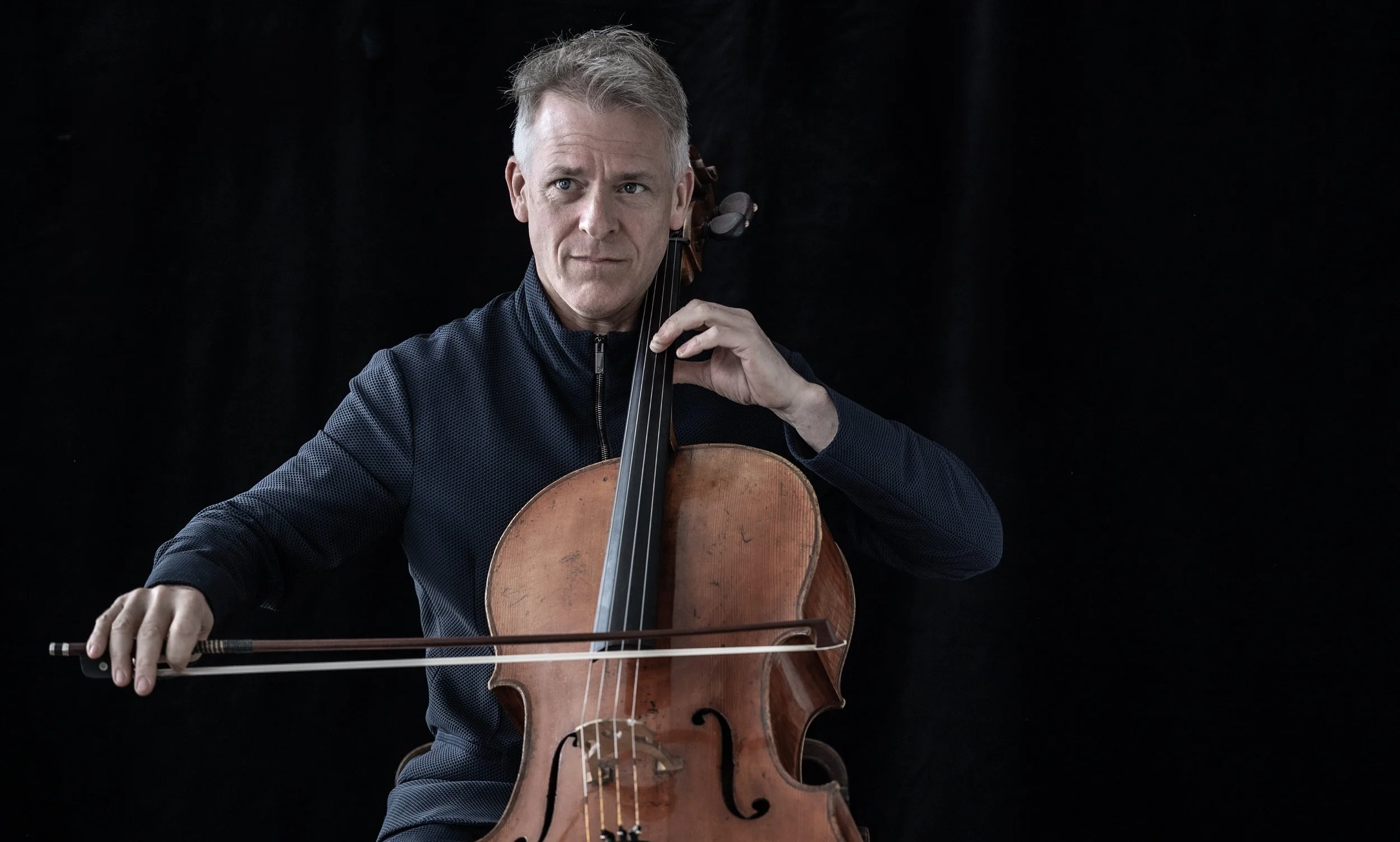
Wieviel Übst Du?
Im Durchschnitt nicht so viel, weil mit all der Arbeit neben dem Cellospielen (Telefonieren, Korrespondenzen erledigen, E-Mails beantworten, Sportresultate herausfinden, Reisen buchen, mit Frau und Kind spielen) an manchen Tagen gar keine Zeit fürs Cello herausspringt, doch an manchen Tagen bringe ich es trotz Stress auf sechs, sieben Stunden. Mein Durchschnitt liegt bei ungefähr drei Stunden pro Tag. Als Student hatte ich mehr Zeit und hatte es auch noch mehr nötig, viele Stunden zu üben….
Übst Du gerne?
Als Teenager und von Natur aus faules Stück mochte ich es nur wenig, um nicht zu sagen, ich hasste das üben. Heutzutage ist es das größte Vergnügen, da ich mich dann wirklich auf eine einzige Sache konzentrieren kann. Kein Telefon, kein Computer mit E-Mail, kein sogenanntes “multi-tasking”, sondern nur das Cello, ich und die Musik. Es ist beinahe wie eine Flucht vor den übrigen Aufgaben, die eine Karriere mit sich bringt. Ich liebe es, neue Werke zu erlernen, und auch das Wiedererlernen von Stücken, die man schon hundertmal gespielt hat, stellt eine grosse Herausforderung dar. Je öfter ich ein Stück intensiv übe, desto tiefer kann ich es empfinden, desto mehr verstehe ich es und erkenne Möglichkeiten, die mir vorher unsichtbar waren, doch so wie alles im Leben, erreicht man die letzten paar Prozent der Vollendung nie und sie schmerzen sehr.