Playing for Youngsters and with Legends
I refuse to spend 27 Euro per day to be able to use the internet in my hotel (Hilton in Brussels)! Yes, these hotels are criminal, if you think that for already 10 Euros you can get a flat rate for an entire month. At lesser fancy hotels the wireless access is included, but since the Orchestre National de Belgique is generously paying for my (very nice) room in this hotel, I am writing these lines in a café before meeting the conductor Walter Weller for dinner. This morning we played a so-called open rehearsal at the Palais des Beaux Arts of about 600 children from and around Brussels. “Open Rehearsal” for which we had to have a rehearsal in order to get all the bits and samples right the moderator wanted us to play. It was a very well crafted analysis of the first movement of Brahms’ Third Symphony and the first movement of the Walton Celloconcerto.No, nothing to do with a rehearsal, but very informative and interesting for the kids, because Michael, the narrator, wanted to give them some tools how to listen to music. There are so many ways how to reach out to the younger population with classical music, but one has to want to make an effort. Today was a wonderful experience, seeing this hall half packed with kids who are not into classical music, but who, after being told what to look out for (little bits of themes being imitated, some rhythms reappearing throughout a movement), listened very attentive to the soft and melancholic beautiful first movement of “my” Walton Concerto. And I am glad we didn’t play the obvious scherzando-like second movement but challenged them with some real emotions. At the Q&A session afterwards they presented me with some pretty profound questions (how does one put emotions into music?” for example) and just showed me that we totally underestimate the desires of the young ones.
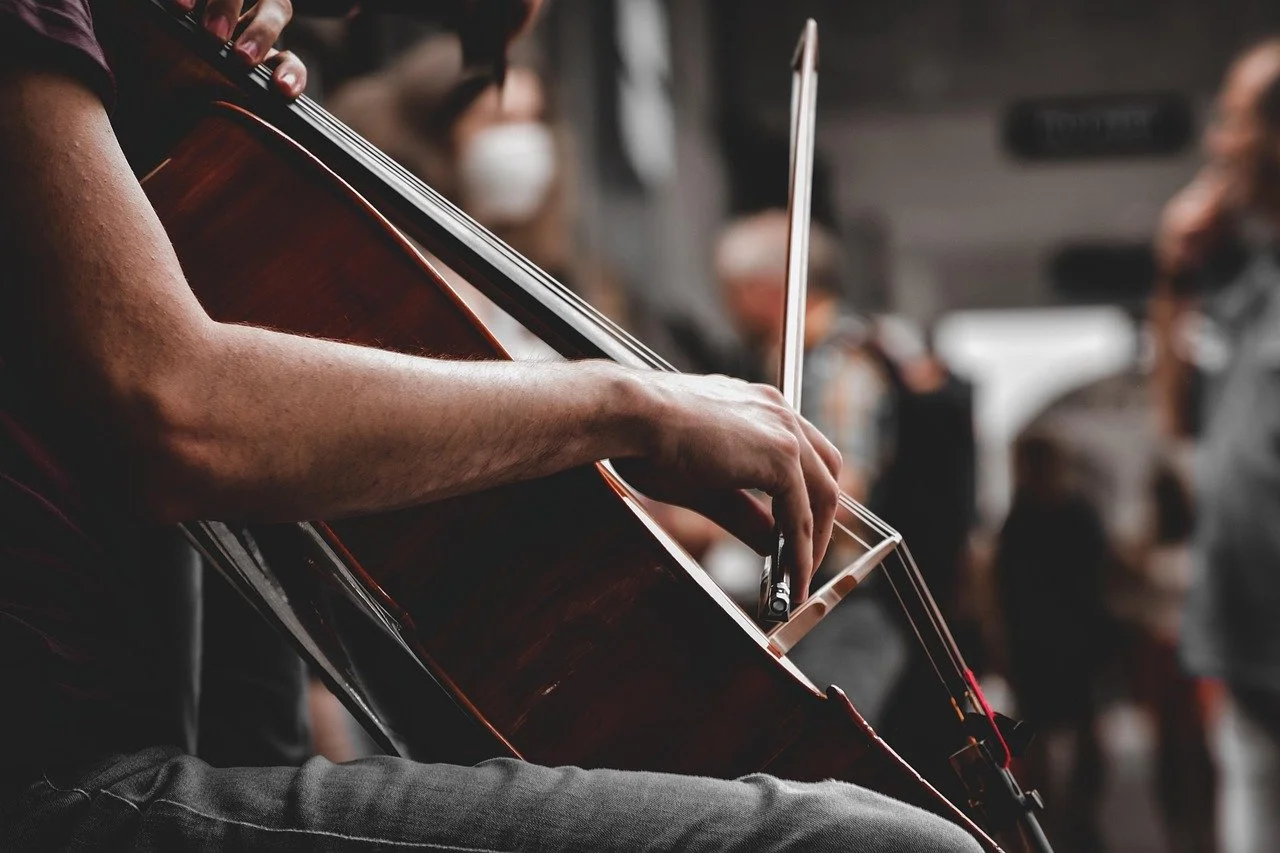
Two weeks ago 60 children came to a rehearsal in Bremen, stayed for one hour and received me warmly the following day in their school. 80% immigration back ground (or whatever the political-correct way of saying is) and no music teacher in the entire school, but a director who knows how much Art and Music can give sense and hope to the lives of the little ones. He was shocked to hear from me that it is difficult to find schools in Germany who will receive professional musicians to play for their children (for free!) but it seems to be a fact that in some of these proud Europeans “cultured” countries the culture can only be found in the big concert halls, theaters, opera houses and museums, the “high-culture”, but that there is very little effort to touch the younger generations. I love going to classrooms with the cello, play for and talk to them about how music benefited my life, and the amazing thing is, they listen with their eyes and hearts open – incredibly rewarding feeling, even much more rewarding than some concerts where I play for people who pay for it and want to like it
It is even a wonderful exercise since “reaching out” demands all the concentration, dedication and emotional impact I can collect within myself, and after a session like that (in Bremen they listened for 90 minutes straight!) I am much more exhausted than after a concert. It is obviously only a drop on the hot stone as we say in German, but as long as I open the minds of 1 young kid per visit towards the beauty of music, I feel blessed.
Legends? I just read the headline and asked myself, why legends? Oh yes, I played with the son of a legend, last week, actually just 4 days ago in Kansas: the son of great Isaac Stern, Michael, very gifted conductor of the Kansas Symphony – we collaborated for the first time ever in the Dvorak Concerto, but people who met us afterwards at dinner thought we knew each other all along; somehow both our sense of humour matched so well that we kept teasing each other in such delicate matters, that it was obvious to them that we must have been old friends. That’s actually the most wonderful side of being a travelling musician: meeting special people all over the world, connecting on deep human levels (well, humour is one of the deepest, and besides that we talked about death, love, sex etc within knowing each other for one hour) – and this is all because true music making connects complete strangers; I knew I could trust him by the way he approached this most beautiful concerto ever (the Dvorak).
Often people are amazed that two musicians can play together without much rehearsal time; it is all a question of being on the same wave-length, even though the characters might be very different, the music-making will be intense and doesn’t need words. My old teacher Markus Nyikos used to tell me that musicians have to feel like an electrical contact between them, without looking, just sensing the other. When I played quartet for a year in University (1989) we sometimes rehearsed with the backs to each other – and we played better together than while giving cues.
Well, hopefully our Walton tomorrow will be as fulfilling as it deserves to be, because I believe in that piece which is not being played enough at all (last time I did was in 2000). Have to run, Maestro Weller is waiting…