Only a dead (or old) conductor is a good conductor ?
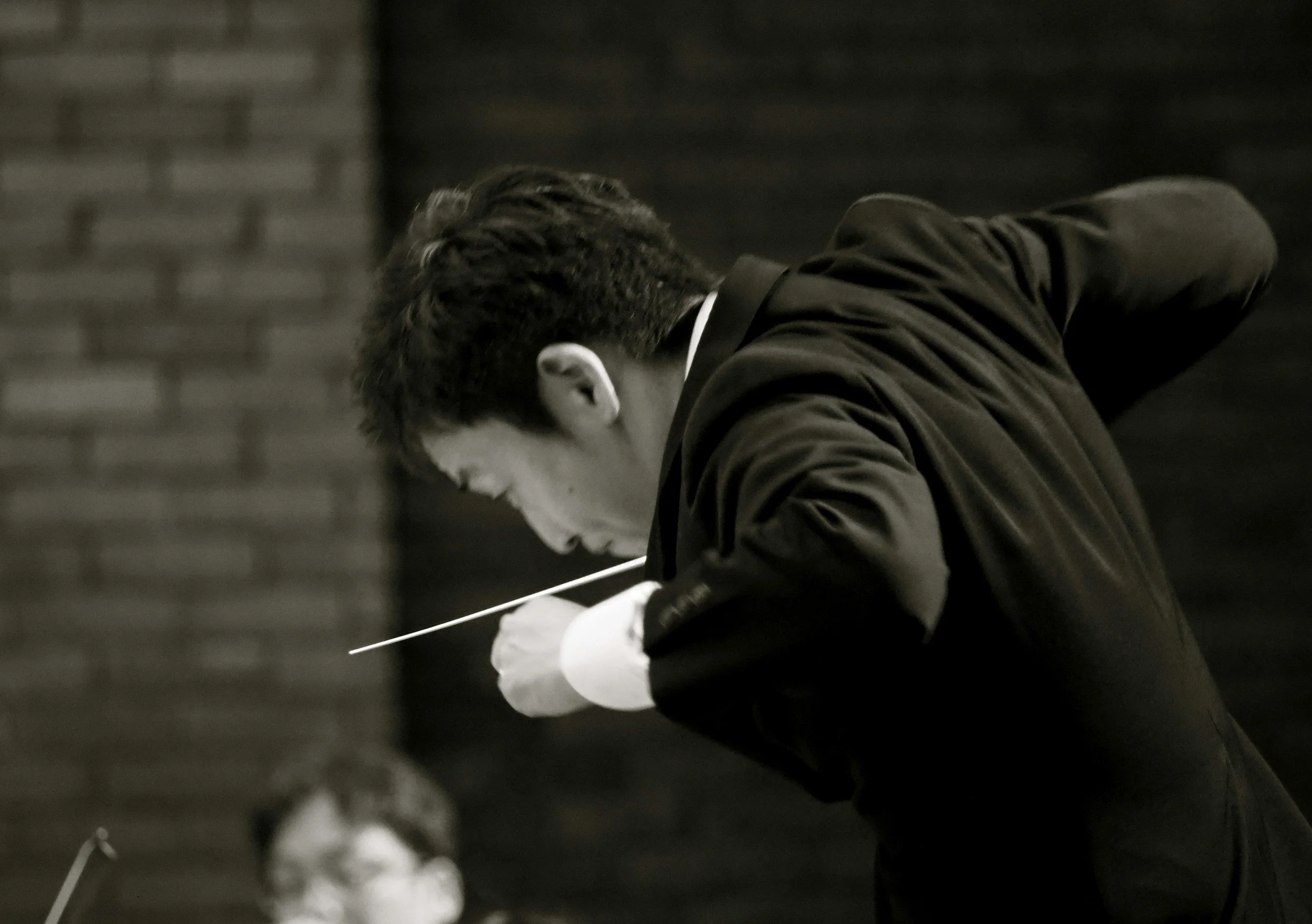
My father is an orchestra musician, plays since 41 years in the Berlin Philharmonic Orchestra. Their principal conductors have always been among the best in the world: he experienced Karajan, Abbado, Rattle. But also the guest conductors are normally the créme de la créme, especially since the orchestra hand-picks them; and still, I grew up with listening to his complaints about conductors which probably made me decide against wanting to become one, even though I think this would have been my destiny; already as a little boy I went to orchestra concerts and operas with the score in my hands.
I played the piano and the cello, but unlike most other young musicians I sat in the basement, sight-reading opera-scores, accompanying the entire violin class of my father, working with my mother (who was a singer), and being just fascinated by the psychology of what makes an orchestra tick. But since I felt so much anger of my father towards these unloved conductors (especially Karajan) it never came to my mind that I could actually become one of them. In general one can say that conductors, as much as they are being loved and admired by audiences, are seen as a necessary evil by orchestra musicians. Latest after three years most orchestra musicians begin to hate their chief conductor. Why?
It is easy to understand with really bad conductors, who have no clue what they are doing. But what is a bad conductor? Somebody who commits mistakes? Somebody who is a bad musician? Or somebody who is only musician but doesn’t know how to transmit his musicianship to an orchestra? There are obviously many levels of conductors and even more opinions about them because they don’t actually produce the sound themselves. They have to make the orchestra play well for them, for the music, for the audience. And that is the difficult part, almost schizophrenic: musicians are individualists, we spent most of our childhood learning these very difficult instruments. We go through the grueling process of competitions and auditions before we are “professionals”. The better the orchestra, the better the musicians in it.
But like with a soccer team, you need somebody who makes them play together, and not just the specific pieces, but especially a principal conductor has the duty to form an orchestra after his taste, his “gusto”, thus highly subjective. How does he do it? By praising the group how wonderful they are? Hardly! He has to criticise, and the farther he wants to carry the orchestra, the more he has to go where it hurts. And since we are all such wonderful musicians, we don’t want to be told about our deficiencies, especially not from a man who quite clearly isn’t perfect himself, because after all he is also just human.
A propos just human: Why is it that in many musician’s opinion Carlos Kleiber was the only great conductor, and now that he is dead there aren’t any like him? What did he do different? He never came too often, he made himself rare, and the orchestras were so scared that he could leave the stage he pulled themselves together and played better for him than for anybody else. Besides this he was a very charismatic and wonderful musician, well-trained conductor, and with his small repertoire he knew exactly what he wanted to do and what he was doing. But now? Only dead conductors are good conductors?
In the past month I had the pleasure to play the same piece (Schumann) with four different conductors, and I must say, with one exception I felt incredibly lucky having worked with very special people, wonderful musicians, who brought something new to each performance - each of them I would consider a great conductor. But do you know Carlos Kalmar (Portland), Peter Oundjian (Toronto) or Gianandrea Noseda (Manchester BBC)? Each of them a wonderful musician and very accomplished conductor, they all know how to work with an orchestra and make it better, but they don’t care much about the fame and the glory, but very much about their orchestras and music which might be the reason that they aren’t much more famous than one should think.
With Noseda I played the Brahms Double last week in Manchester (together with French violinist Olivier Charlier), and “his†Schumann First Symphony was as good as it gets - passionate while see-through, free but with a great pulse, none of the “traditional” rubatos most listeners, who know their repertoire solely from recordings, expect just heaven for me to listen and enjoy! Actually, this performance proved all critics wrong who say that Schumann isn’t a great composer for orchestra.
So to answer my question in the title: No, there are many excellent conductors out there, some of them very special, and I personally believe that many of the great old conductors would have a hard time succeeding nowadays, because orchestras are much better trained but also much more demanding and less forgiving. A conductor must not make a single mistake, otherwise the orchestra will label him as not so good, thus the respect disappears and the musician’s effort will be much smaller. And by God, the old conductors made plenty of mistakes!
But it was their aura which made them great, and often in our very fast-paced time the young conductors don’t get the chance to work their problems out and develop into charismatic leaders because they are getting scrutinized on the big stages of this music business by orchestras, critics, managers, recording labels – all of them demand too much too quickly - and all of them expect every conductor to have the biggest repertoire, the perfect technique, the biggest heart, the greatest intellect and besides that a degree in psychology to actually manage to deal with the psyche of an orchestra. Good luck finding this guy!