Hommage to Casals
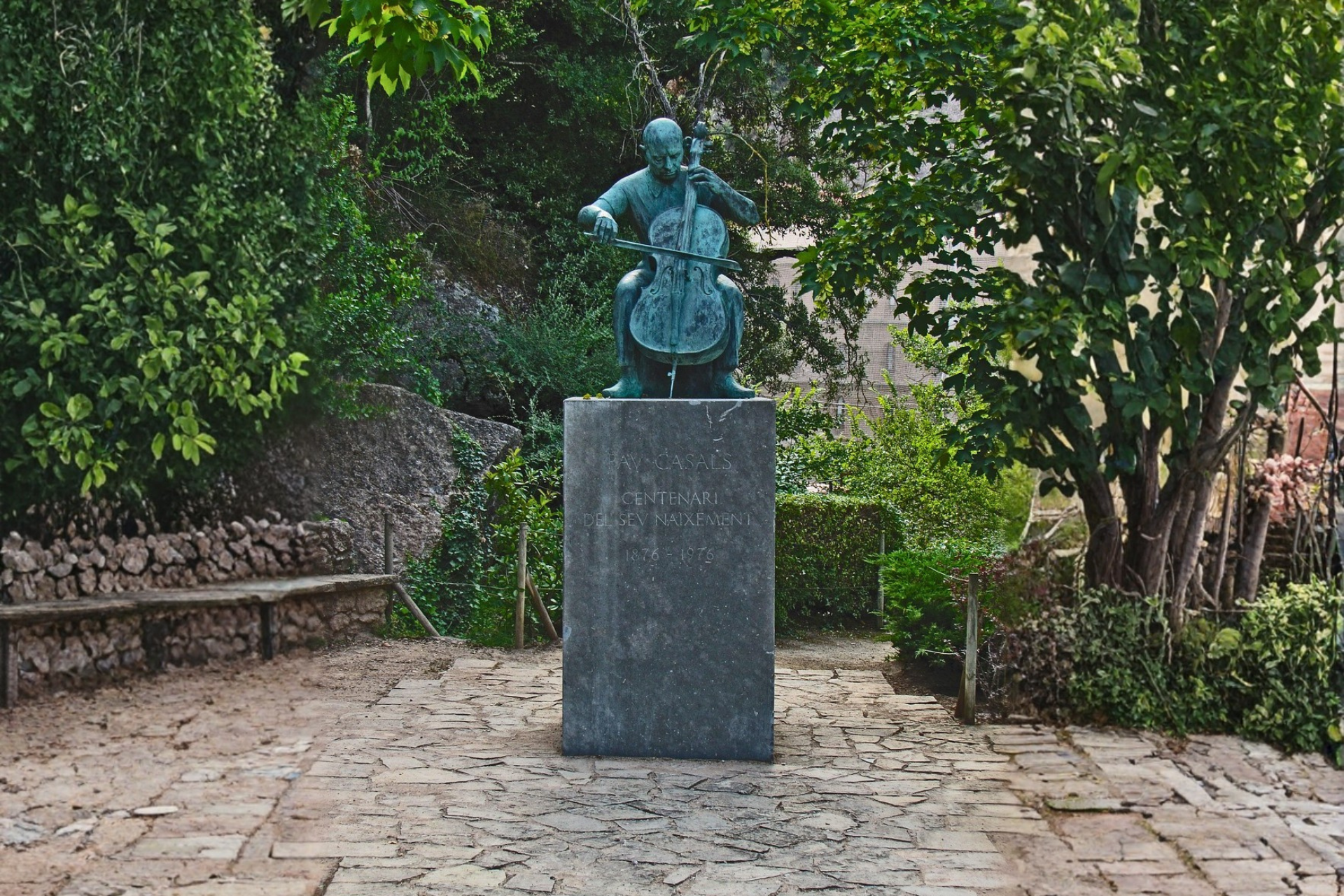
My first idol was the great Spanish cellist Pablo Casals. I bought every single LP I could get my hands on and for the longest time his way of soundproduction was how I wanted to sound myself. I loved the intensity, the articulation, the “interpretative” intonation (playing the minor thirds very low, leading notes very high etc.) and even the grunting were part of the package. My teacher Boris Pergamenschikow spent most of the three years I studied with him (1989-92) trying to teach me the more modern and generous way of playing the cello, but still in 1990, when I played for Norbert Brainin (1st violinist of the Amadeus Stringquartet) Beethoven’s C-Major-Sonata, he told me after waking up from his little nab he took during this 12 minute performance, that I reminded him of Emanuel Feuermann. I still have that comment on tape somewhere, and although I obviously couldn’t and still can’t play like Feuermann (maybe in my dreams), he was referring to my rather old-fashioned way of playing in general, not one particular cellist.
12 years ago I recorded my first and only encore disc in the debut series of EMI; Spanish encores which I dedicated to my Puerto Rican wife whom I had met and married three years prior. Recently I felt it was time to do another one, just for the fun of it. But how to label it? Back then it was the Spanish theme, and now I had the simple idea to search Casals’ five encore cd’s for the pieces I liked most and record them as a hommage to my first idol. Actually I had picked the pieces already since more than a year, and my label Hyperion reacted rather excited about the idea, but I had not managed to gear myself up to actually finding scores, pianist and fix a date for the recordings. Why? I was scared, because I remembered how much work it was twelve years ago; to record two sonatas of 60 minutes is comparably easy, but to record 18 little pieces can be a nightmare, especially if it is repertoire which I don’t know.
And what pianist to pick? There are plenty of accompanists who could have done it, but I wanted somebody special, a “real” pianist. I know there are many musicians who are happy to even perform or record sonatas with so-called “accompanists”, but I absolutely love the challenge (and the final result) to do it with a musician who is equal or better than me. Steven Osborne and Markus Becker, the two pianists I have recorded with so far fell under that category, but both weren’t interested in recording cello encores, with good reason: there is not much to shine for them while it is pretty hard work. Mike Spring from Hyperion suggested my good friend, phenomenal pianist Cecile Licad, but I didn’t dare to ask her, since she lives in New York and is far too brilliant for just “accompanying” work.
But soon I got hooked with the idea because I knew if I could indeed record it with somebody of such authority, it would elevate the quality of performance far above it being mere showpieces. Every work would appear as the jewel it indeed is. While in a sonata you have time to tell the story of the piece in 30 minutes, in encores you have three minutes of saying anything of value. And what worth would a recording be if you don’t manage to give it some value? And if I call the cd “hommage to casals”, I maybe should not try to imitate the way how he played, but I should choose the same approach he chose when playing these pieces, treating them with the utmost care, intelligence, love and sensitivity as you would do with a newly discovered piece by Beethoven. Casals didn’t make a difference in his serious approach between let’s say a movement of a Bach Suite and the beautiful Romance op.35 by MacDowell. He might play Bach differently to MacDowell, but he takes it equally important.
To shorten my lenghty thoughts: This Monday I returned from the three day recording session, and as exhausting as it may have been, it was a very fulfilling experience. Cecile had graciously accepted the challenge of being my partner in crime, providing her beautifully instincitve way of performing music combined with her absolutely amazing technical superiority, Hyperion had booked the most perfect recording venue at the border to Wales in the middle of nowhere (Wyastone Estate), great sounding hall with my favorite recording crew Andrew Keener and Simon Eadon, and with the kind help of Susanne Hein from the ZLB Berlin (big library) I found most of the wanted music just in time to prepare and memorize it for a hopefully memorable encore disc
I took my son János, whose last day of school was when I had to leave to London, with me, and even though we recorded at least eight hours every day, he enjoyed himself immensely; he was my inspiration behind the scenes, reading his books, playing some computer games and otherwise acting as the co-producer, telling me off when my playing was a bit boring or too emotional. In between we followed some soccer games, fell silent when Germany beat England with the gracious help of the referee – what a strange tournament with so many bad calls, hard to take it serious at all.
The week before I had the chance to play my debut with the DSO Berlin under its chief conductor Ingo Metzmacher with Dutilleux’ “Tout un monde lointain” in a very emotional performance since it was the last time Ingo conducted his orchestra in Berlin. We had three very intense rehearsals and for the first time I really felt on top of this gorgeous but tricky concerto of which I adore especially the slow movements. One reviewer was lacking sensuality which didn’t surprise me because I feel incredible love and tenderness and maybe longing during these movements, but I wasn’t really trying to be sensual since I didn’t feel it in this music. The other day, in Zurich, I heard Lisa Batiashvili giving a sensational rendition of the Sibelius Concerto. One critic mentioned similarily to the guy in Berlin that it was a bit cold – oh, I would have loved to tell him that it is part of the music, that you can only feel the warmth when there is also cold. Performances which live exclusively from warm, beautiful colours, get in my eyes so boring and meaningless, and especially in the Sibelius Concerto there is so much need also for coldish colours which make your blood freeze.
Now I am returning from a little run-out to Bad Kissingen where I played last night the Schubert Quintet together with former colleagues of my father, the Philharmonia Quartet, quite a treat! And now off to the tennis courts to get rid of some pounds collected by the late-night dinners after tiring recording sessions!